In-home product testing

Real products in real homes,
on camera

In-home product testing (IHUT) sends a product to people's homes and follows it from unboxing to first use and the days after. On Qualzy, they film what they do at home on their phone, with no app to install, so you see how it's really used as well as hearing what they think.

Examples of what you can research

The first hour, and the fortnight after

The first hour

Unboxing and first use

Film the parcel arriving, the box opening and the first go with the product. Someone might tell you it's easy to open. Seeing them open it tells you whether it really is, which instructions they skip and what they reach for first.

The weeks after

Living with it

First impressions and day-ten impressions are often different. A diary over a week or more shows whether the product becomes part of the routine, what changes after the novelty wears off, and the moments it frustrates or delights.

Side by side

Sensory and comparison tests

Taste, smell, texture or performance, rated on the scales your study needs and explained in people's own words. Send different products to different groups, or two to everyone, and compare the results within one project.

An example schedule

From the doorstep to day ten

One way to lay out a ten-day test. Each stage can unlock only once the one before it is done, so nobody reviews the product before they've opened the box.

  1. Before it arrives

    What they use now

    A short form on their current product and what they expect from the new one, so you have something to compare against.

    Forms
  2. Day 1

    Unboxing

    They film the parcel being opened and talk through first impressions, before reading a word of the instructions.

    Video upload
  3. Day 1 or 2

    First use

    The first go, filmed in the kitchen or bathroom where it'll actually live, then a first set of scores.

    Video and Card Score
  4. Days 3 to 9

    Living with it

    A short diary entry after each use, and a post whenever something goes well or badly in between.

    Diary and Social Posts
  5. Day 10

    The verdict

    The same scores as on day one, a final video, and the question that matters most: would they buy it?

    Card Score and video
At home

Filmed, scored and written up at home

Video uploads from participants with transcripts and AI summaries

Video, audio and image uploads

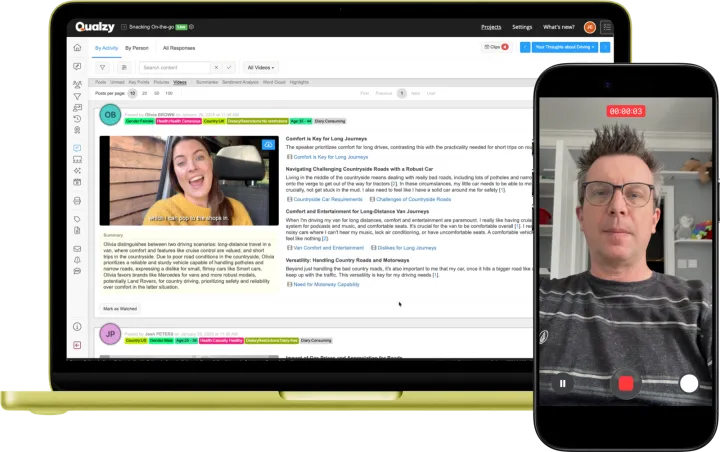
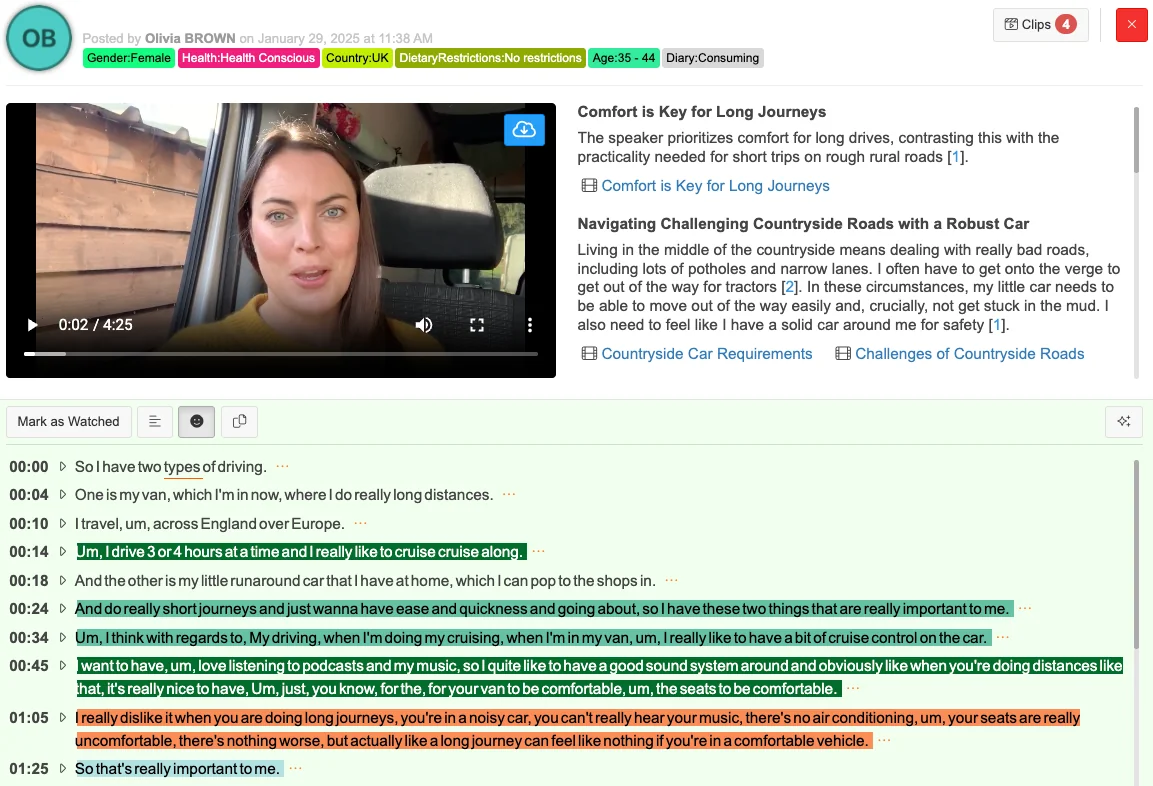
People film the unboxing, record their first use and photograph the product in its place at home, from the phone in their pocket. Every video is transcribed when it arrives, and AI pulls out key points with timestamped verbatims, so a long video becomes a short list of what was said, each point linked to its moment in the recording.

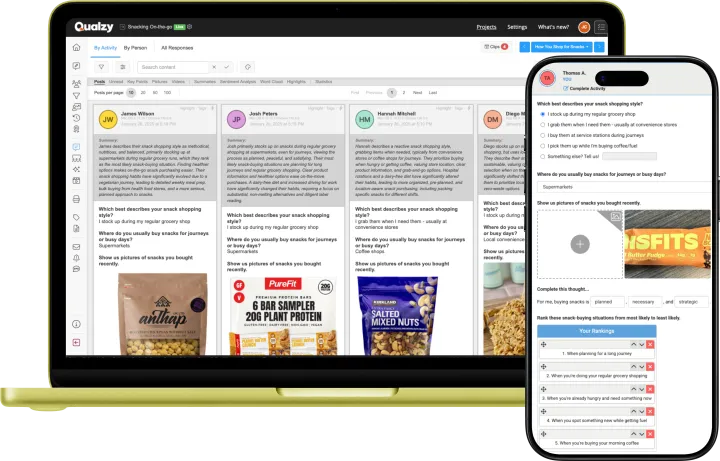
A diary form on a phone, with multiple choice, photo upload and ranking questions, beside the researcher's view of the answers

Forms & Diary Entry

A diary entry after each use, or every evening, with the same core questions each time so you can see how opinions change across the trial. Scales and open questions sit side by side.

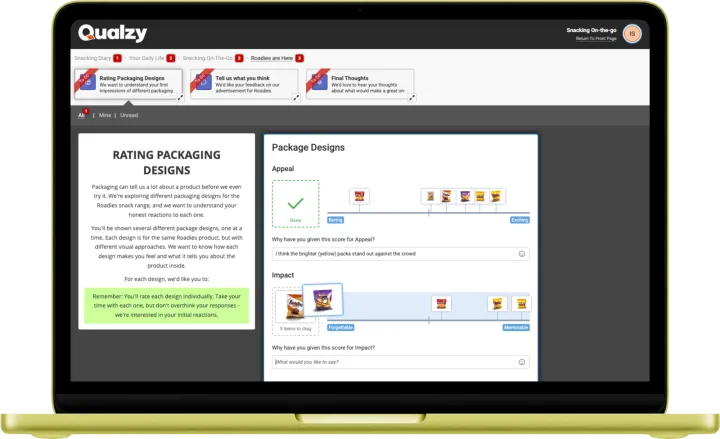
A card score activity with items rated on a scale

Card Score

Rate the product, or several products, on the criteria that matter, such as taste, ease of use or value, with the reasoning after each scale. Qualzy calculates the scores and can plot any two criteria against each other.

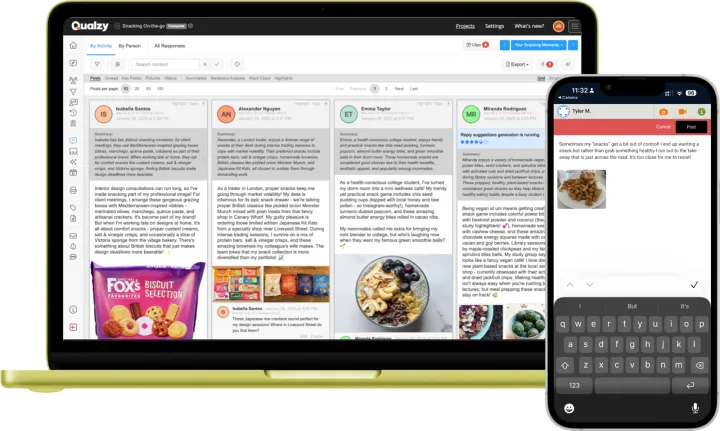
Participants' social posts with photos, and AI summaries above each one

Social Posts

For the moments you can't schedule. People post a photo, a quick video or a voice note when something happens with the product, in the middle of cooking or the morning routine, and you can reply to ask what happened next.

Customer stories

Products that went home with people

Veylinx

62 coffee machines in real homes

Veylinx measures real purchase intent: if participants say they'd buy a product, it's shipped to them. Qualzy added the qualitative layer. Participants filmed the unboxing, their first use and their thoughts days later, all from their phones, and the videos went straight into client-ready reels.

  • 62 machines shipped
  • <10% dropout
  • 50+ videos
Read the Veylinx story

"You can see how people are actually using the products. Someone might say 'it's easy to open' but we know that in some cultures, politeness plays a role. Seeing it adds depth."

Mariana Monroy, VP of Insights, Veylinx

From videos to the debrief

Show the client people using it

  • Every video transcribed. Read what people said, then jump to the moment in the video you want to see.
  • A short list from a long video. AI summarises each submission and pulls out key points, each with the verbatims it came from.
  • Ask about any moment. Use Maizy Chat to ask the whole dataset a question, such as what people said about the smell on first use, during fieldwork or after it.
  • Clip reels for the debrief. Turn verbatims into clips and export a reel of people unboxing and using the product. See video analysis.
A participant video in Qualzy with its AI summary, key points and the transcript lines behind them highlighted
A participant video with its summary, key points and the transcript lines they came from.
FAQ

Planning an in-home test

How long does an in-home product test take?

Usually a week or more, so people can use the product properly before they report back. Set the length from how often the product gets used: something used daily might need a week, something used weekly needs longer.

Do participants need an app to film themselves?

No. They take part in a web browser on their phone, tablet or computer, and record or upload video straight from it.

Can the tasks happen in a set order?

Yes. Activities can be set to unlock only after the previous one is complete, so unboxing comes before first use, and first use before the follow-up.

Can we run the same test in several countries?

Yes. Each market runs as its own project at the same time, in any of 30+ languages, with posts translated as they arrive.

Can different groups test different products?

Yes. Within one project you can split participants into groups and send each group a different product or variant, then compare what happened across them.

15-minute Discovery Call

Tell us what you’re sending out

The product, who it’s for and how long they need to live with it. We’ll sketch out a schedule with you on the call.